UK Gel Nail Chemical Restrictions Raise Questions for UAE Salons and Customers

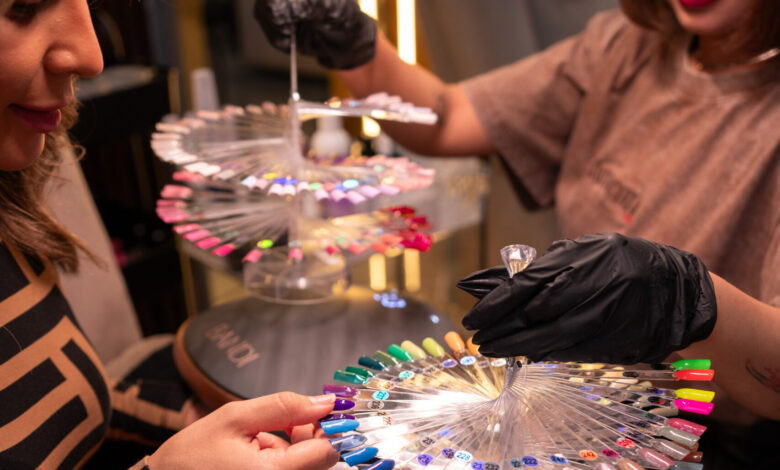
The rules do not ban gel manicures, but the removal of one ingredient has renewed debate over product safety, salon transparency and the choices available to consumers.
Gel manicures have become a regular part of the beauty routine for many women in the UAE.
From neighbourhood beauty centres to luxury hotel spas, salons promote them as a convenient treatment for customers who want glossy, chip-resistant nails that dry quickly and can last for several weeks.
But new restrictions in the United Kingdom, following similar action in the European Union, have placed one ingredient used in some gel nail products under closer scrutiny.
The chemical, Trimethylbenzoyl Diphenylphosphine Oxide, commonly known as TPO, is a photoinitiator. It helps certain gel products harden, or cure, when exposed to ultraviolet or LED light.
The EU prohibited cosmetic products containing TPO from 1 September 2025 after it was classified as a Category 1B reproductive toxicant. Products containing the ingredient can no longer be sold or used by nail technicians in the EU, even if they were purchased before the deadline. The European Commission says no application was submitted for an exemption before the prohibition was adopted.
Britain has taken a phased approach, restricting manufacturers from placing new TPO-containing cosmetics on the market while allowing salons time to use existing stock.
Despite some reports describing the measures as a “gel nail ban”, gel manicures themselves have not been prohibited. The restrictions apply to TPO, and manufacturers can use alternative ingredients to perform the same curing function.
Could the UAE follow?
There is currently no publicly announced UAE timetable for prohibiting TPO in cosmetic products. However, changes introduced in Europe are expected to influence the products available to salons across the Emirates.

Ruby Barreau, founder and creative force at March14 Beauty Residence, believes the UAE market is already beginning to move towards alternative formulations.
“I think the UAE market is moving in that direction naturally,” she told Dubai Diaries. “We have access to so many international brands and product systems here that clients and salons have already started choosing more conscious formulas.”
However, Barreau said some of that shift had been driven more by marketing than by a genuine understanding of ingredients and their possible effects.
European manufacturers selling into the EU have had to reformulate affected products. As those new ranges are distributed internationally, TPO-free formulas are likely to become more widely available in the UAE without salons necessarily waiting for local regulation.
“I haven’t seen an official UAE timeline specifically regarding TPO, so I wouldn’t want to give a date that hasn’t been announced,” Barreau said.
“But I do expect international regulations to influence the UAE market, particularly as European manufacturers reformulate their products.”
She expects the local transition to take place progressively through changes in product availability, education and industry standards.
Why gel manicures remain popular
Gel manicures are considerably more popular than conventional nail polish at March14 Beauty Residence, according to Barreau, largely because they suit Dubai’s fast-moving lifestyle.
“Clients want something immediately dry, glossy and resistant that can stay looking good for weeks,” she said.
“They are working, travelling, going to events and going to the beach. They don’t necessarily have time to redo their nails every few days.”
Regular nail polish continues to appeal to customers who want a simple manicure, prefer not to use a curing lamp or want to remove the colour easily at home.
However, the durability and convenience of gel have made it a major part of the UAE salon business. Treatments are frequently marketed through social media images, promotional packages, memberships and promises of long-lasting wear.
This emphasis on the finished result can divert attention from the product being used underneath it.
“The biggest issue for me is that beauty has become extremely results-driven,” Barreau said. “People see the finished nails on Instagram, but they don’t necessarily know what was used underneath, how it was applied or whether that system was appropriate for their natural nails.”
Not every gel system is the same
Barreau said her salon had been working towards TPO-free alternatives well before the EU announcement.
Although TPO has a technical role in helping gel products cure, she said the ingredient itself is not essential.
“The curing function is essential, and manufacturers can use alternative photoinitiator systems to achieve it,” she said. “The technology has evolved enormously, and there are now TPO-free formulas that perform extremely well.”
The broader issue, she added, is whether salons understand the differences between the products they offer and can select an appropriate system for each customer.
Builder gel, hard gel and softer gel systems have different formulations and purposes. A product suited to a customer seeking additional strength and several weeks of wear may not be appropriate for somebody wanting a lighter manicure with minimal reinforcement.
“It’s impossible that one product or one brand can answer every nail request,” Barreau said. “We work with different systems precisely because the right choice for one client may be completely wrong for another.”
She also cautioned consumers against relying too heavily on terms such as “builder gel” or BIAB, an abbreviation for Builder in a Bottle.
A product is not automatically gentler or safer simply because it carries one of those descriptions. Consumers and salons must still examine its formulation, including whether it contains TPO, HEMA or other acrylates.
Are UAE customers asking questions?
Despite growing international attention around cosmetic ingredients, Barreau said relatively few customers ask what is contained in their gel polish.
Detailed questions tend to come from people who have previously experienced allergies, sensitivities or other reactions.
Other customers choose a salon because they trust its technicians to understand the products and select an appropriate system, rather than because they recognise individual ingredient names.
There is also a contradiction between the demand for gentler formulas and expectations around performance.
“People want cleaner and gentler products, but they still expect exactly the same durability, strength and wear from every formula,” Barreau said. “Those two things have not always gone together.”
A conventional or water-based polish cannot necessarily be expected to provide the same wear as a professionally cured gel system. But that does not mean TPO is responsible for making a manicure last longer; its specific role is to help the product cure.
“For us, the objective has been to find cleaner alternatives that still perform,” Barreau said. “If I can achieve the same professional result with a more conscious formula, there is no reason for me to choose the older formulation.”
A wider accountability gap
The debate also highlights a broader question about accountability within a large and competitive beauty industry.
Barreau believes salon standards should cover more than hygiene and the final appearance of a manicure.
Salons should know the origin and ingredients of the products they purchase, how each system must be cured and which clients it is suitable for. Nail technicians should also understand the differences between systems instead of routinely using the strongest product simply because it lasts longer.
Manufacturers and distributors also have a responsibility to communicate changes clearly.
“If a formula changes or an ingredient becomes restricted internationally, that information should reach salons clearly and quickly,” Barreau said.
Clear labelling is particularly important in a market where products are imported from numerous countries and where global brands may reformulate at different times.
Consumers should not assume that descriptions such as “premium”, “vegan”, “clean” or “organic” confirm that a gel product is TPO-free. Nor should price alone be treated as proof of quality or safety.
What should customers ask?
Barreau recommends first asking how many nail systems a salon works with.
The answer can indicate whether technicians assess each customer’s natural nails, history, lifestyle and expectations before choosing a product, or whether the same system is being applied to everybody.
Customers can also ask:
- Which brand and exact nail system will be used?
- Is the product TPO-free?
- Can the salon provide or show its ingredient information?
- Why is that system suitable for the condition of their nails?
- Is the correct lamp being used to cure that particular product?
- What alternatives are available if they want a lighter or softer system?
Customers should tell their technician if they have previously experienced itching, redness, swelling, peeling or blistering after a manicure.
TPO is not the only ingredient that has raised concern. Some people can develop allergies to acrylates used in gel and artificial nail systems, particularly when uncured product repeatedly comes into contact with the skin.
Transparency may become the new selling point
Barreau believes international restrictions will change the products used by UAE salons, even without an immediate local prohibition.
“Once major manufacturers reformulate, those new products naturally enter other markets, including the UAE,” she said.
Dubai’s international customer base may also accelerate the shift. Residents travel, follow developments in other countries and increasingly expect salons to explain what they use.
For Barreau, however, businesses should not wait for regulation before reviewing their products.
“If we know that a newer alternative exists and can give our clients the performance they expect with a more considered formulation, I would rather make that change before somebody tells me I have to.”
The changing rules do not establish that all gel manicures are unsafe. They do show how quickly cosmetic standards can evolve and how little customers may know about products used during treatments they receive regularly.
For UAE consumers, the most immediate effect is likely to be a wider choice of reformulated, TPO-free products.
The larger test will be whether salons explain those changes, train technicians to use the new systems correctly and give customers enough information to make an informed choice.