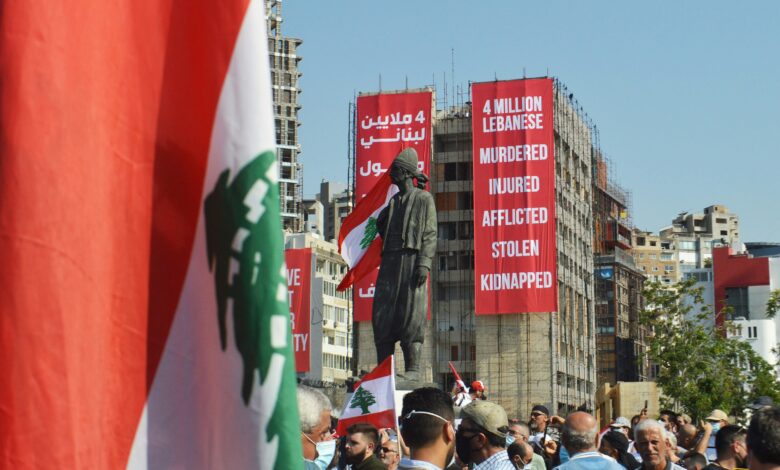
Lebanon’s Prime Minister Nawaf Salam announced the decision on Thursday following Israeli strikes a day earlier that killed over 200 people.
He said the surge of attacks was a “blatant violation” of international and humanitarian law and undermines ongoing efforts to halt the war.
He added that the cabinet has also ordered security forces to tighten control over the capital by “enhancing the state’s full authority across Beirut and restricting arms to legitimate forces.”
The Israeli army on Wednesday accused Hezbollah members of moving north of the capital and blending into civilian areas.
Lebanon digs for survivors after deadliest day of renewed war
Lebanon reeled Thursday after the deadliest day in more than five weeks of renewed war between Israel and Hezbollah, as rescue workers in Beirut and elsewhere searched for survivors and bodies and Israel warned of escalation.
Israeli strikes on Wednesday killed at least 203 people and wounded more than 1,000, Lebanon’s health ministry said. Israel’s military said it targeted sites of the Iranian-backed Hezbollah militant group, but several strikes hit densely packed commercial and residential areas without warning during rush hour, leading to widespread civilian casualties.
Lebanese President Joseph Aoun called the attacks “barbaric.” Israel said the ceasefire in the Iran war doesn’t apply in its fight against Hezbollah.
Lebanon’s army reopens key bridge struck by Israel
The Lebanese army said Thursday it cleared the Qasmieh bridge after Israel hit it on Wednesday, and deployed a unit nearby.
The bridge is the last direct crossing for most traffic into the coastal city of Tyre over the Litani River, the strategic line separating southern Lebanon from the rest of the country.
Israel has struck several bridges in the area, accusing Hezbollah of moving fighters and equipment, but the crossings are also vital for civilians and humanitarian aid. The strikes come as Israel seeks a “buffer zone” to protect its northern towns, raising fears of long-term occupation and displacement.
Iran’s parliament speaker warns of ‘strong responses’ against strikes on Lebanon
Iran’s parliament speaker warned Thursday on X that continued Israeli attacks on Hezbollah in Lebanon would bring “explicit costs and STRONG responses.”
Like other Iranian officials, Mohammad Bagher Qalibaf insisted that the two-week ceasefire extended to Lebanon, something denied by both Israel and the U.S.
“Ceasefire violations carry explicit and STRONG responses,” he wrote. “Extinguish the fire immediately.”
Qalibaf has been discussed as a possible negotiator who could meet U.S. Vice President JD Vance this weekend for talks in Islamabad, the capital of Pakistan.
‘Time for pleasantries is over,’ says Emirati diplomat
“Candor has become a necessity and our collective stance must be firm and clear regarding the contours of the coming phase to strengthen stability and security in the region,” Anwar Gargash, a diplomatic adviser to the president of the United Arab Emirates, said Thursday.
The UAE’s Foreign Ministry said Wednesday that Iran should be held accountable for its attacks on civilian infrastructure and other vital facilities during the war, adding that Iran “is fully liable for damages and reparations.”
The UAE continued to report Iranian attacks against its territory hours after the U.S. and Iran reached a fragile two-week ceasefire agreement.
Source: AP news