Cybersecurity in 2026: Why Businesses Must Rethink Their Defences as AI Accelerates Threats


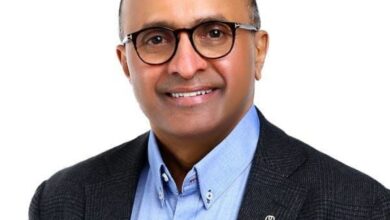
Cybercriminals are moving faster, attacks are becoming harder to detect, and artificial intelligence is changing the rules of cybersecurity. For businesses in the UAE and across the Middle East, 2026 has brought fresh challenges as familiar threats such as phishing, ransomware and credential theft become more sophisticated and increasingly automated. With organisations in the region facing an average of 2,750 cyberattacks each week, compared with a global average of 2,315, the pressure to stay ahead has never been greater. But are businesses adapting quickly enough? As the year draws to a close, Derek Middlemiss, Regional Director of Sales Engineering, EEMEA, and Security Evangelist in the Office of the CTO at Check Point Software Technologies, speaks to Dubai Diaries about the threats that have defined 2026, how AI is reshaping cybercrime, and what business leaders need to prioritise to strengthen their defences in 2027.
1. Looking back at the first nine months of 2026, how has the cybersecurity threat landscape evolved? Which threats have been the most significant for organisations, and have any emerging attack patterns caught businesses off guard?
The threat landscape has become materially faster. The techniques themselves are not always new, but the way attackers combine and automate them has changed. Phishing, credential theft, ransomware and vulnerability exploitation remain effective, while AI is helping attackers move through reconnaissance, social engineering and exploitation at greater speed and scale. Hybrid working, cloud adoption and connected technologies have also dispersed risk across a broader environment, making consistent visibility and protection more difficult.
The Middle East saw an average of 2,750 cyber attacks per organisation each week over the last six months, compared with 2,315 globally. Email also remained a major entry point, accounting for 84% of malicious file delivery in the region last month.
One development businesses need to watch closely is multi-channel social engineering. An attack can start with an email, move to a phone call or messaging platform, and then rely on the victim to complete the final step. AI is making these interactions easier to scale and more convincing. This reinforces the need for a prevention-first approach that blocks malicious activity as early as possible, before separate signals develop into a full-scale incident. As attack cycles accelerate, organisations cannot rely on detection and manual intervention alone; automated prevention is increasingly important to contain threats before they affect the business.
2. How has the increasing use of artificial intelligence changed the nature, scale and sophistication of cyberattacks in 2026? Are organisations keeping pace with these developments, or is the gap between attackers and defenders widening?
AI has moved from assisting attacks to operating parts of them. It can now participate across the attack lifecycle, from reconnaissance and malware development to live intrusion and vulnerability exploitation, automating workflows that previously required sustained human direction. This shift allows attacks to move at machine speed and compresses the time defenders have to respond, increasing the importance of real-time intelligence and prevention that can operate at the same pace.
Businesses are moving quickly as well. AI adoption is accelerating because companies are seeing real value in productivity, customer engagement and automation. The concern is that security can sometimes lag behind deployment, creating gaps in visibility, data protection and governance.
There is a gap to close, particularly as AI transformation moves into more critical business processes. That does not mean slowing adoption; it means securing it from the outset. Organisations need to discover where AI is being used, govern how employees and systems interact with it, and protect applications, models, agents and data in real time. Combining security for AI with AI-powered prevention enables defenders to operate at machine speed, reduce risk continuously and support innovation with confidence.
3. What have been the most notable cybersecurity challenges for businesses in the UAE and wider Middle East this year? Have you observed any shifts in the industries being targeted or the techniques cybercriminals are using?
The region is experiencing a significant amount of technology change at the same time. Businesses are accelerating AI adoption, moving more workloads to the cloud and relying on increasingly connected services. Attackers are looking for opportunities across the resulting expansion of the attack surface.
The UAE recorded an average of 2,212 attacks per organisation each week over the last six months. Ransomware attempts affected 10.7% of organisations weekly, showing that established threats remain a serious business concern even as newer AI-driven techniques emerge.
Across the wider Middle East, education, telecommunications, energy and utilities, and government have seen significant levels of activity. There is also growing use of multi-channel social engineering and compromised infrastructure, alongside AI being used to make attacks faster and more scalable.
For businesses, the challenge is keeping security aligned with the pace of change. As AI becomes part of everyday operations, security needs to be built into that transformation rather than addressed afterwards. A unified, prevention-first architecture can reduce complexity and deliver consistent visibility and protection across hybrid networks, cloud environments, digital workspaces and AI systems. It also helps organisations map how systems, data and AI services interact, so controls can be aligned with actual business exposure.
4. As we enter Q4, which cyber threats do you anticipate will demand the greatest attention? Are there particular vulnerabilities, attack methods or emerging risks that organisations should be preparing for now?
Vulnerabilities will remain a major concern, particularly as attackers become faster at exploiting them. The shrinking interval between disclosure and exploitation means organisations need continuous exposure assessment, faster validation and a clear remediation process. In Q4, the priority should be to shorten the path from identifying a credible threat to applying the appropriate protection, rather than allowing backlogs to grow while attackers move at increasing speed.
Check Point’s 2026 Exposure Gap Report found that vulnerabilities accounted for 42.6% of critical exposure, compared with 18.7% in 2025. Yet only 7.8% of vulnerability alerts warranted Critical or High attention after exploitability validation. That makes prioritisation essential: organisations need to identify which weaknesses are reachable, exploitable and connected to material business risk, then move quickly from intelligence to safe remediation. The goal is not simply to generate more alerts, but to reduce exposure before attackers can act.
AI also needs to be part of Q4 planning. More businesses are introducing AI applications and agents into day-to-day operations, including systems that can access business information and take actions. Security teams need visibility into that activity and controls that can prevent unsafe or unauthorised actions before they affect data, systems or business operations.
5. With 2027 approaching, what lessons should businesses take from the cyber incidents and threat trends of 2026? What should CISOs and business leaders prioritise in the final quarter to strengthen their cybersecurity resilience for the year ahead?
The biggest lesson from 2026 is that technology adoption and cyber risk can no longer be managed as separate conversations. New services, cloud workloads and AI capabilities are entering business processes faster than traditional security reviews can accommodate. For 2027, cybersecurity therefore needs to be considered at the point when new capabilities are designed and introduced, with clear accountability shared across security, IT and business leadership.
The final quarter gives CISOs and business leaders an opportunity to establish a clear view of where AI is already being used across the organisation, what information it can access and what actions it is able to take. That includes approved applications as well as AI tools that employees may be using as part of their day-to-day work. From there, organisations can apply consistent governance, data protection and access controls.
Leaders should also use Q4 to review whether security investment is reducing measurable business exposure. That means identifying overlapping tools, closing gaps between teams and ensuring that intelligence can be translated into action without unnecessary manual steps. Clear ownership, tested processes and a small set of risk-based priorities will be more valuable than adding controls without an operational plan.
Organisations should also regularly test their incident response and recovery plans to ensure that critical operations can continue if an attack succeeds. Prevention remains the priority, but resilience also depends on the ability to contain disruption, recover quickly and apply lessons across the wider security environment.
For 2027, the objective should be to give the business confidence to innovate while keeping risk visible and controlled. CISOs can support this by linking cybersecurity priorities to critical services, data and business outcomes, and by giving leadership a clear view of where intervention will have the greatest impact. This turns security from a reactive technical function into a practical enabler of resilient growth.