Left Behind, Again: The UAE’s Pet Abandonment Crisis and the Summer That Could Make It Worse


The last two months have seen an unprecedented wave of abandoned pets across the UAE. Dogs tied to lampposts, cats and kittens left in cages, shelters pushed beyond anything they have known before. Animal welfare workers are still picking up the pieces. And they are already dreading what comes next: summer, and the annual exodus that has historically been the worst season of all for the country’s animals.
The handwritten note was taped to the cage. Inside were a mother cat and four kittens healthy, bewildered, and entirely unaware of what had just happened to them. Their owner had left in a hurry, the note explained, and could not take them along. A resident in Al Ain found them on her doorstep at dawn.
A few hours’ drive away in Dubai’s Al-Nahda neighbourhood, a dog had been tied to a lamppost. He was still there when a passing resident stopped, looked at the collar, and understood. His family was gone.
These were not isolated incidents. Over the last two months, scenes like these have multiplied across the UAE at a pace animal welfare workers describe as unlike anything they have encountered before. Shelters that were already stretched have been pushed beyond capacity. Rescue volunteers have fielded calls around the clock. And through it all, a growing community of carers, professionals and ordinary residents has scrambled to contain a crisis that arrived with very little warning.
— — —
The Scale of What Has Happened
The numbers are stark. At the Ras Al Khaimah Animal Welfare Centre, more than 600 dogs were in care by mid-April, with between 10 and 30 new animals arriving daily — figures that would have been unimaginable even a year ago. Across Dubai, Abu Dhabi, and the Northern Emirates, rescue organisations have reported a sustained surge in surrendered and abandoned animals since early March that shows no sign of slowing.
Animal welfare organisations including K9 Friends Dubai, Dubai Street Kitties, and Six Hounds in Al Ain have all reported operating at or beyond full capacity. Volunteer rescue networks logged hundreds of social media posts documenting animals found tied to street furniture, left in empty apartments, on balconies for days, tied outside villas, or deposited at shelter gates overnight. In some cases, animals were discovered in the desert, dehydrated and alone.
Perhaps the most troubling cases involved animals that did not need to be abandoned at all.
Veterinary clinics across Dubai reported receiving requests to euthanise healthy pets from owners who had convinced themselves they had no other option. Those requests were declined. But the fact that they were made is a measure of how unprepared and how panicked some owners became.
The root of the crisis is not complicated. A significant number of residents left the UAE over recent months with less time to prepare than they would have wished. Pet relocation requires documentation, vaccinations, health certificates, and airline coordination that cannot be compressed below a certain timeline. When that timeline collapses, the animal is the one that pays.
— — —
The Community That Showed Up
Into the space left by overwhelmed shelters, a remarkable volunteer infrastructure mobilised. No Pet Left Behind, a WhatsApp-based network that connected residents willing to foster, transport or temporarily adopt animals, grew to more than 5,000 members within days of launching. It worked alongside licensed shelters and day-care services to provide a rapid-response layer that the formal sector alone could not have delivered.
Professional services stepped up too. For businesses like The Petshop, a well-established pet care and relocation company in Dubai, the weeks of peak departures brought an extraordinary volume of urgent calls – owners who had left preparations too late and needed someone to tell them what was still possible.

Amr Hazem, CEO of The Petshop, describes the approach his team took with owners who called in a state of near-panic.
“The first thing we do is take a breath with them and then we get to work. Whether a 48-hour turnaround is possible depends on a few critical factors, and we assess them immediately.”
— Amr Hazem, CEO, The Petshop
Those critical factors, Hazem explains, are almost entirely about documentation. A pet with current vaccinations, a complete health booklet, and a clearly recorded microchip can be moved out of the UAE far faster than most owners assume. Where documentation has lapsed, manifest cargo relocation, where the pet travelling on a subsequent flight under professional supervision while the owner flies ahead, typically takes between 10 working days and three weeks.
The single most common obstacle he has encountered, he says, is also the most preventable.
“Without question, it has been expired vaccinations. This is the most common barrier we encounter — and unfortunately, it is also the one that causes the most delays when time is already short. Keeping vaccinations valid and documentation current is something we encourage all pet owners to stay on top of, even when relocation feels like a distant possibility. In moments of urgency, it is the difference between a manageable process and a genuinely stressful one.”
— Amr Hazem, CEO, The Petshop
Six Pawz, a full-service pet care centre in Dubai’s Jumeirah Village Triangle founded by certified dog trainer and groomer Shweta, became a quiet lifeline for owners who needed time. Its boarding facilities operating with 24/7 supervised care, gave families a bridge: somewhere safe and professional where an animal could wait while its owners sorted travel, settled abroad, and arranged for the reunion.
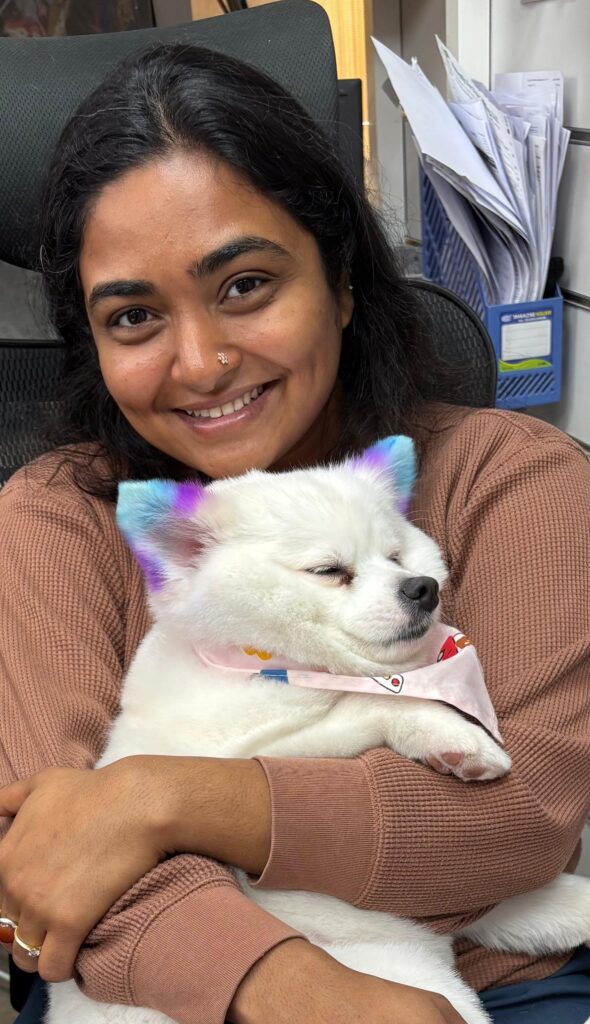
“At Six Pawz, we’ve seen a clear shift from routine services to urgent requests. Some pet parents have chosen to leave their pets with us temporarily. Boarding demand has increased, particularly where pet owners want 24/7 supervised care. We are also supporting clients who are currently travelling and unable to return — stepping in with home visits, feeding, and even home grooming to ensure their pets’ routines remain uninterrupted.”
— Shweta, Founder, Six Pawz
Shweta is clear on one point that often gets lost in the wider narrative: for the vast majority of her clients, what looked like abandonment was something else entirely.
“Most pet parents are not choosing to leave their pets behind, they are making a temporary arrangement under difficult circumstances. A number of our clients have placed their pets in our boarding care, knowing they are safe, while they sort out travel and relocation. In many of these cases, the intention is always to reunite, and we support that by staying ready to coordinate relocation once things become more predictable.”
— Shweta, Founder, Six Pawz
Six Pawz has already facilitated the full relocation process for a number of animals that spent time in boarding, handling documentation, liaising with relocation specialists, and preparing pets for travel once their owners were ready to receive them.
Hazem’s team has operated in the same spirit, launching what they call Foster Kits: complimentary packages, food, hygiene essentials, treats, a grooming voucher, and a practical settling-in guide, distributed to residents who opened their homes to animals in need.
“It has been one of the most meaningful things we have done, and the response has been incredibly heartwarming.”
— Amr Hazem, CEO, The Petshop
The stress registers in the animals themselves too. Hazem’s grooming team has seen a marked increase in stress-related shedding and fur loss in recent weeks physical signs of anxiety in animals whose routines and households have been disrupted.
“Stress in animals often presents physically: increased shedding, patches of fur loss, or visible signs of excessive self-grooming. When we identify these signs, we take the time to speak with the owner, recommend targeted products and techniques to support the animal at home, and where appropriate, flag anything that may benefit from a veterinary consultation.”
— Amr Hazem, CEO, The Petshop
— — —
Now Read the Calendar
Here is the uncomfortable truth that everyone working in UAE animal welfare is sitting with right now: the last two months already the most demanding on record for many shelters were not the peak.
Summer is.
Every year, as temperatures begin their climb in May and June and families across the UAE start planning their annual migrations home, the country’s animal shelters enter what welfare workers have long called ‘dumping season’. It is the most predictable crisis in UAE animal welfare documented, decried, and repeated with near-perfect consistency for well over a decade.
The pattern is well established. Rescue organisations report that the calls begin arriving as early as April ‘I’m leaving’, ‘I’m going home for the summer’, ‘I can’t take my dog with me’ and build to a flood by June. In a single July in a recent year, one Dubai-based animal activist rescued three times the number of cats she had handled in the same month the previous year. At shelters across Ras Al Khaimah, Abu Dhabi, Fujairah and Dubai, the summer intake consistently overwhelms resources that are already thinly spread.
The reason most commonly cited by owners: they do not want to pay for boarding. Professional boarding in the UAE ranges from AED 30 to AED 180 per night depending on the facility and level of care. For a family spending two or three months abroad, that figure can feel significant. The alternative they choose – abandonment – is illegal, potentially lethal for the animal, and places the full burden of their decision on the volunteer sector.
The second most common reason: the belief that pet relocation is too complicated. Animal welfare professionals across the sector have challenged this directly and repeatedly. Relocating a pet from the UAE is a manageable process. It requires microchip registration, current vaccinations, a government-endorsed export health certificate, and compliance with the destination country’s import rules. It takes time, but that time is available to anyone who plans ahead.
— — —
What Summer Does to the Animals Left Behind
In most parts of the world, abandoning a pet is a welfare crisis. In the UAE in July and August, it can be a death sentence.
Daytime temperatures regularly exceed 45 degrees Celsius. A dog left outside without water and shade can die within hours. Cats abandoned in empty, unventilated apartments run out of food and water within days. Animals deposited in desert locations, as they are, every summer, with grim regularity face heatstroke, dehydration, and exposure with no means of escape.
Cases of this kind are not theoretical. Rescue organisations have recovered animals tied up in industrial areas in full summer heat, without food or water. Husky breeds and other dogs ill-suited to extreme temperatures have been found dead of heatstroke. In every instance, the owner had gone and left no forwarding address.
The seasonal pattern has one further cruelty built into it: the same summer that drives owners to abandon their animals also drives the volunteers who might otherwise foster them out of the country. Shelters absorb more animals precisely when fewer people are available to care for them.
— — —
This Year, the Stakes Are Higher Than Ever
In a normal year, the animal welfare sector would enter summer strained but functional. This year, it enters summer with shelters already at or beyond capacity, rescue networks already exhausted, and a volunteer base still recovering from two months of unprecedented pressure.
The organisations that have carried the weight of the recent crisis – K9 Friends, Stray Dogs Shelter UAQ, Dubai Street Kitties, RAKAWC, No Pet Left Behind, Six Hounds, and dozens of individual rescue volunteers across the Emirates – are the same organisations that will be asked to carry the weight of the summer season. The arithmetic is not encouraging.
Shweta at Six Pawz is direct about what responsible pet ownership looks like in this context.
“Plan ahead as much as possible. Ensure your pet’s vaccinations and documents are up to date, and most importantly, have a backup plan. If relocation is not immediately possible, identify a safe and reliable care option. At Six Pawz, we’ve been supporting both scenarios – boarding pets with full-time care for those leaving the country, and providing home visits, feeding, and grooming for those who are away but intend to return.”
— Shweta, Founder, Six Pawz
Amr Hazem frames it in terms of what every pet owner already knows, even if they sometimes act as though they do not.
“What you are doing matters more than you realise. In uncertain moments, pets look to us for consistency, comfort, and a sense of safety and the way you continue to show up for them, even in the small, everyday ways, makes a real difference. We are here to support you, guide you, and make caring for your pet feel a little simpler and more reassuring, no matter what is happening around us. Because when pets feel safe, everything else feels a little more manageable. For them, and for you.”
— Amr Hazem, CEO, The Petshop
Back in Al Ain, the cat and her four kittens were rehomed within the week. The dog in Al-Nahda was taken in by the neighbour who found him. They are among the ones whose stories have good endings.
The shelters are full. The summer holidays are eight weeks away. And somewhere in the UAE tonight, a pet is sleeping next to an owner who has not yet made a plan.