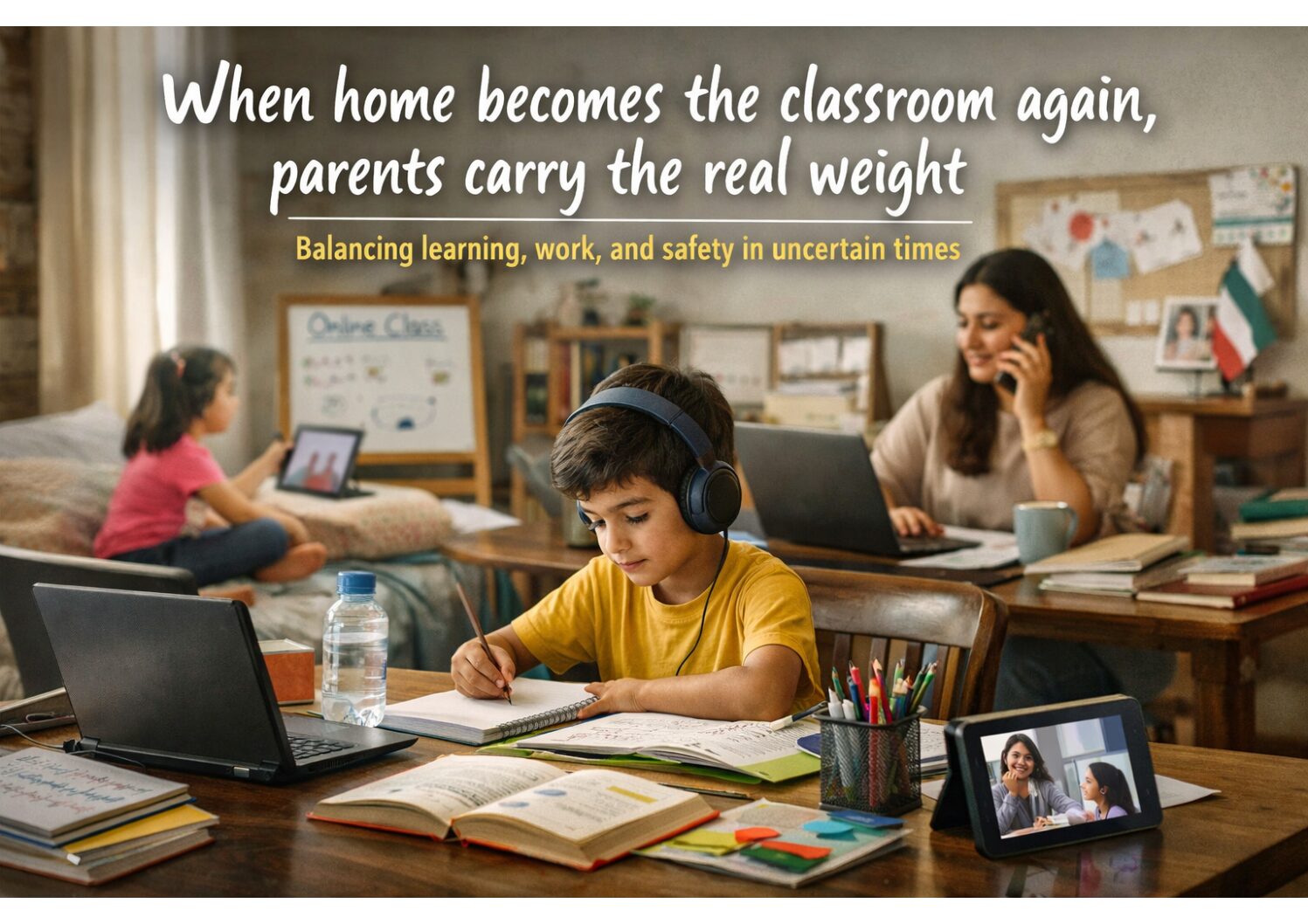
My home has once again been transformed into a makeshift classroom.
The dining table is no longer just where we sit together for meals. It is now scattered with books, chargers, worksheets and water bottles. My son’s study desk is in constant use. The bedroom has become a quiet corner for concentration. Every room seems to carry a different part of the school day. At the same time, work has not paused. Calls still need to be taken. Deadlines still need to be met. Emails still need replies. And somewhere in the middle of all that, like so many parents across the UAE right now, I am trying to make sure my child is learning, coping and feeling secure.
As an editor, I can look at this as an education story. As a mother, and a working mother, I know it feels far more personal than that.
In Dubai, educational institutions remain on distance learning under KHDA guidance, while some schools seeking an earlier return to in-person classes have been asked to submit formal requests for approval. Some of the country’s biggest school groups have already moved in that direction, hoping to bring certain student groups back sooner if permission is granted. That tells us something important. This is no longer only about whether schools can function online. It is also about whether families can keep absorbing the strain – emotional, financial, and more, while the wider situation remains under review.
What makes this bigger than a UAE school story is that families across parts of the Gulf have been carrying versions of the same disruption. Qatar shifted schools and universities to distance learning before announcing a phased return to in-person classes. Bahrain also moved educational institutions online as a precautionary measure. The timelines may vary, but the pressure inside homes has looked strikingly similar across the region. When systems switch into contingency mode, families quietly become the structure holding education together.
From the outside, home learning can still sound manageable. The timetable is shared. The teacher is on screen. The child is technically in class. Inside the home, it is often much messier. Parents are not simply supervising lessons. They are juggling work calls, logins, assignments, dropped internet, emotional meltdowns and the constant effort of keeping a child engaged in a setting that was never designed to function like a classroom.
That experience, though, is not the same in every home, and it is important to acknowledge that honestly.

“As a mum of an 8-year-old, I find distance learning fairly suitable given the current situation in the UAE. My child receives a good amount of face time with his teachers and is well supported throughout his lessons during the day. His learning continues smoothly without any major interruptions. We are mindful of the time spent online during class hours and make an effort to include writing in books during certain activities. We also try to balance study time with physical activities throughout the online sessions, which has helped my child enjoy his overall learning experience,” says Meryl Firozi, mum to an 8-year-old in year 3.
This positive experience is echoed by other parents too.
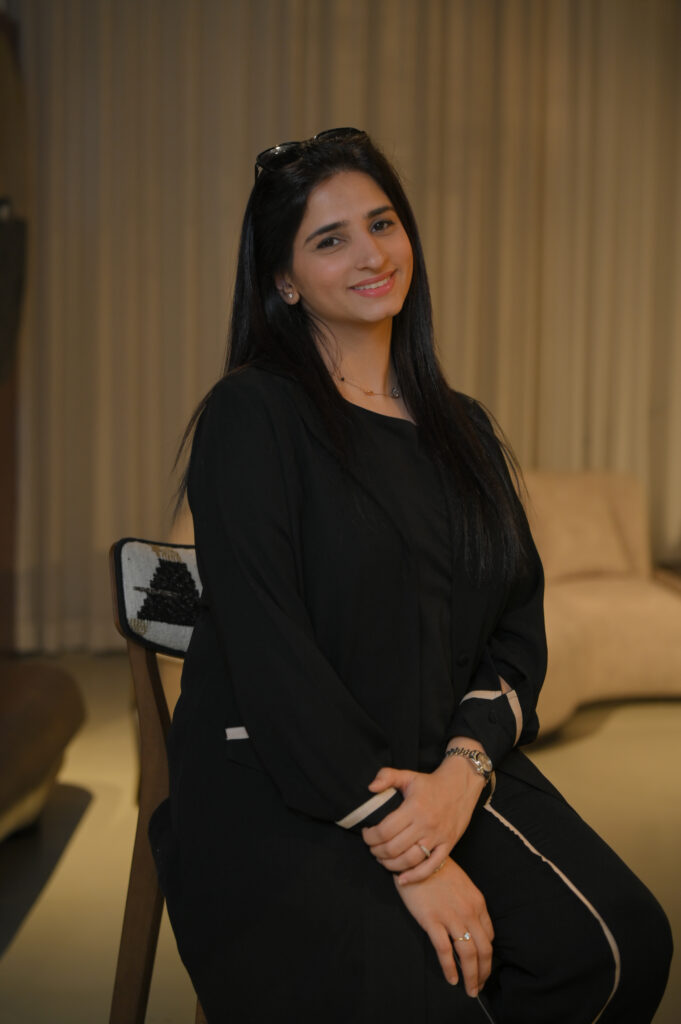
“Honestly, it is so heartwarming to see how eager the kids are, always excited to talk to their teachers and be part of every class. As a parent, I truly feel the effort schools and teachers are putting in. It is turning this whole distance-learning phase into something really meaningful for them. We did it during Covid, and now again. We are managing fairly well and taking it one day at a time. Honestly, we are even loving the extra family time,” says Halima Sadiya, Founder of KnackTag Media.
Those voices matter because they bring balance to the conversation. They remind us that distance learning is not landing as a burden in every household. In some homes, the structure is working, the children are adapting, and the extra time together is even creating moments of unexpected closeness.
But that is not the whole picture either.
For many working parents, home learning is still a daily logistical and emotional puzzle. It demands that you collapse two full-time roles into one day and somehow keep both afloat. It is a pressure I know personally.

“Distance learning has been a masterclass in flexibility and patience for a working mom. One moment, I’m lost in a professional project, the next I’m managing a second-grader’s live lesson and providing tech support at the same time. It’s a logistical puzzle that demands you blend two full-time roles into one, often chaotic day. But the core lesson we’re all learning is resilience, not just for the children, but for us parents too. It’s tough, but in our vibrant school and parent community, we are finding strength in partnership and proving that adaptability is the most crucial skill we can teach our children right now.
But how are parents reacting to a phased approach in getting children back into the classroom? “The question of sending our children back to the physical classroom is an entirely different kind of calculus now. It’s an extremely stressful situation. The precautionary move to distance learning in the current situation was absolutely the right decision, and I am hesitant in sending my child back to the classroom until that threat level is demonstrably reduced,” says Amber Dale-Haider, Founder of Chatterbox PR & Events, and mum to a second grader.
That is the emotional truth sitting beneath the education debate. Parents are not simply choosing between online and in-person learning as if both options exist in a vacuum. They are weighing safety, routine, work, emotional wellbeing and the practical limits of what their family can sustain.
And when the child is young, the burden becomes even sharper. Younger children need more prompting, more reassurance and much more hands-on support. They need help staying focused, help managing frustration and often just the comfort of knowing someone is nearby. Even the best online setup cannot change that basic reality. It simply shifts more of the daily responsibility into the home.
There has been some recognition of the pressure on parents, particularly caregivers who are trying to balance work with younger children learning from home. That matters. It reflects what so many families are already living: when a child studies from home, someone has to carry the invisible labour around that learning.
Parents are not asking for perfection. They are asking for realism. They want schools to communicate clearly. They want online learning to be structured without becoming punishing. They want teachers and school leaders to remember that while a child may be physically at home, that does not mean an adult is fully available beside them every hour of the day. And they want the conversation around reopening to reflect the reality families are actually living, not just the operational readiness of schools.
The UAE deserves credit for being better prepared for this than many systems would be. Across the Gulf, education authorities have shown they can move quickly when needed. But preparedness should not only be judged by whether lessons can move online or campuses can reopen in phases. It should also be judged by whether families can realistically sustain what is being asked of them.
As Editor, I can say this is an important education story for the region. As a mother, I would put it more simply.
When home becomes the classroom again, parents carry the real weight.
That weight deserves more empathy, more flexibility and far more recognition than it usually gets.